As we get ready to close out 2026 and head into a new year, now is a great time to evaluate your side hustle and look for new opportunities to grow your business.
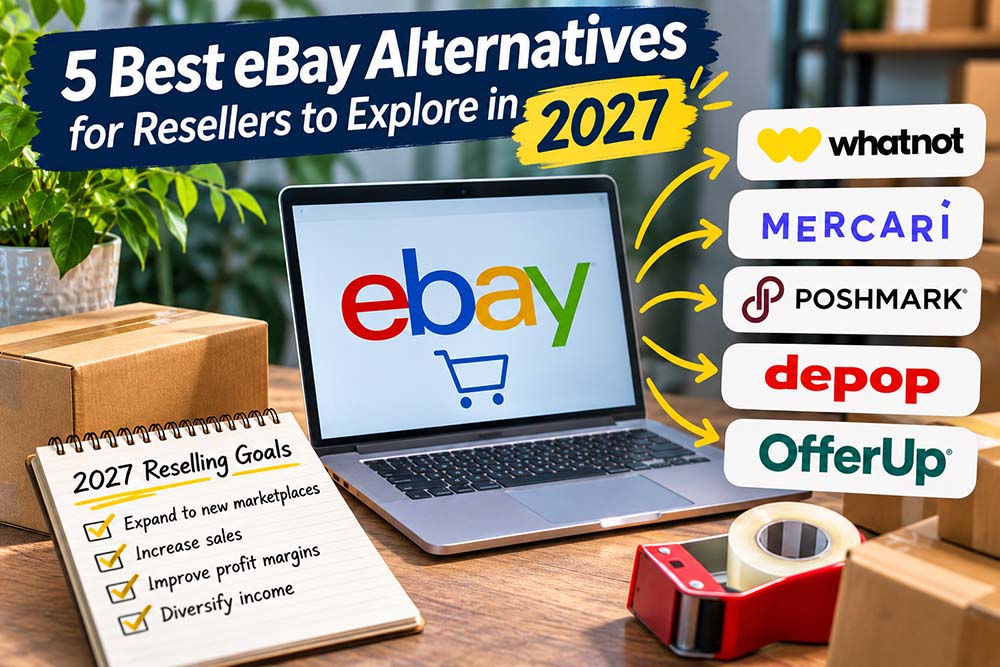
If you make extra money selling products on eBay, one of your goals for 2027 might be to increase sales, improve profit margins or find new customers without significantly increasing your expenses.
One way to accomplish this is by expanding beyond eBay.
While eBay remains an excellent platform for resellers, it’s no longer your only option. Other online marketplaces offer competitive selling fees, specialized audiences and different ways to sell products.
We’re not suggesting you abandon eBay. Instead, consider how adding another sales channel could help you build a more diversified and profitable reselling business.
Here are five of the best eBay alternatives worth exploring in 2027.
Why Resellers Should Diversify in 2027
Whether you’re a weekend reseller or running a full-time reselling business, relying on a single marketplace comes with risks.
Changes to selling fees, marketplace policies, search algorithms and account restrictions can all impact your business.
Expanding to additional marketplaces could help you:
- Reach new customers.
- Reduce your dependence on a single platform.
- Improve profit margins through lower selling fees.
- Move inventory that isn’t selling on eBay.
- Discover new product categories and sourcing opportunities.
- Build a more sustainable reselling business.
For comparison, eBay currently charges sellers without a Store subscription a final value fee of 13.6% in many product categories, plus a per-order fee. Rates vary depending on the category and seller’s subscription.
With that in mind, let’s look at five alternatives worth adding to your 2027 business plan.
Note: The U.S. selling fees referenced throughout this article reflect published marketplace policies as of November 2026. Fees and policies may change during 2027.
1. Whatnot – Best for Live Selling and Collectibles
Website: Whatnot.com
If there’s one marketplace worth experimenting with in 2027, especially for collectible resellers, it’s Whatnot.

Whatnot offers a different approach to online reselling by combining e-commerce, livestreaming and entertainment.
Instead of simply listing products and waiting for buyers, sellers can host live shows where customers bid on products, ask questions and interact with the seller in real time.
Whatnot also supports traditional marketplace listings for sellers who prefer not to rely entirely on livestreams.
What Can You Sell on Whatnot?
- Sports and Pokémon cards
- Comic books
- Sneakers
- Vintage clothing
- Coins
- Sports memorabilia
- Toys and collectibles
- Video games
Whatnot Selling Fees
Whatnot charges a selling commission that varies by product category and sales volume. U.S. payment processing fees are currently 2.9% plus $0.30 per transaction.
Depending on your category and sales volume, your overall selling fees could be lower than eBay’s.
View Whatnot’s current selling fees.
Pros Compared to eBay
- Opportunity to sell multiple products during a single livestream.
- Potentially lower selling fees in certain categories.
- Ability to build a loyal audience of repeat customers.
- Interactive shopping experience.
- Excellent fit for collectibles and hobby-related merchandise.
- Traditional marketplace listings are also available.
Cons Compared to eBay
- Live selling requires additional preparation and time.
- Building an audience can take time.
- Products may sell below their market value during auctions.
- Requires some comfort interacting with customers during live shows.
- Less suited to sellers who prefer a completely hands-off listing strategy.
Is Whatnot Worth Trying in 2027?
If you already sell sports cards, collectibles or vintage merchandise on eBay, Whatnot should be high on your list.
Consider hosting a small weekly livestream or experimenting with inventory that has been sitting in your eBay store for several months.
You may discover an entirely new way to generate revenue from your existing inventory.
2. Mercari – Best Overall Alternative to eBay
Website: Mercari.com
If you’re looking for a marketplace that offers a selling experience similar to eBay, Mercari is a great place to start.
Mercari allows users to photograph products, create listings, set prices and communicate with potential buyers through its website or mobile app.
Its straightforward selling process makes it an attractive option for both experienced and beginner resellers.
What Can You Sell on Mercari?
- Electronics
- Clothing and shoes
- Toys
- Video games
- Household items
- Collectibles
- Beauty products
- Sporting goods
Mercari Selling Fees
Mercari currently charges sellers a 10% selling fee based on the item’s price and any buyer-paid shipping.
Buyers are also charged a Buyer Protection fee, which is something sellers should consider when pricing products.
View Mercari’s current selling fees.
Pros Compared to eBay
- Lower standard selling fee than eBay in many categories.
- Simple and beginner-friendly listing process.
- No standard upfront listing fees.
- Integrated shipping options.
- Supports a wide variety of products.
- Easy to cross-list existing eBay inventory.
Cons Compared to eBay
- Generally smaller potential buyer audience.
- Some niche products may be harder to sell.
- Buyer fees can increase the overall purchase price.
- Buyers may frequently negotiate prices.
- Fewer advanced selling tools than eBay.
Is Mercari Worth Trying in 2027?
Mercari is one of the easiest marketplaces for existing eBay sellers to experiment with.
You already have the product photos, descriptions and inventory. With some minor adjustments, you can create additional listings on Mercari without having to source new products.
If you only plan to add one new general-purpose marketplace in 2027, Mercari would be a good starting point.
3. Poshmark – Best for Clothing and Fashion Resellers
Website: Poshmark.com
If your reselling side hustle involves sourcing clothing from thrift stores, estate sales, clearance racks or outlet stores, Poshmark is worth considering.
Poshmark has built its marketplace around fashion and incorporates social shopping features that allow sellers to interact with buyers and build a following.
Unlike eBay, where clothing is one of many product categories, fashion is central to the Poshmark shopping experience.
What Can You Sell on Poshmark?
- Men’s and women’s clothing
- Children’s clothing
- Designer handbags
- Sneakers and shoes
- Jewelry
- Fashion accessories
- Select home goods
Poshmark Selling Fees
Poshmark currently uses a straightforward commission structure:
- Sales under $15: $2.95 flat fee.
- Sales of $15 or more: 20% commission.
While these fees can be higher than eBay’s, access to a fashion-focused customer base could make the additional expense worthwhile for certain products.
View Poshmark’s current selling fees.
Pros Compared to eBay
- Dedicated audience looking for clothing and accessories.
- Straightforward shipping process.
- Social features that help sellers build a following.
- Opportunity to sell multiple items through bundles.
- Easy to establish a fashion-focused online storefront.
Cons Compared to eBay
- Higher selling fees in many situations.
- Less suitable for general merchandise.
- Maintaining an active closet can require additional time.
- Lower-priced items may have limited profit margins due to flat fees.
- Limited appeal for many electronics and collectible resellers.
Is Poshmark Worth Trying in 2027?
If clothing makes up a significant portion of your eBay inventory, Poshmark is definitely worth testing.
Don’t let the higher selling fees automatically discourage you. An item that sells faster or commands a higher price on Poshmark could still generate a better overall return.
The important thing is to compare your actual profit across both platforms.
4. Depop – Best for Vintage Clothing and Streetwear
Website: Depop.com
Depop is another marketplace that fashion resellers should have on their radar heading into 2027.
While Poshmark appeals to a broad fashion audience, Depop is particularly interesting for sellers who focus on vintage clothing, streetwear, unique fashion and current style trends.
The platform’s visual shopping experience feels more like browsing a social media feed than a traditional online marketplace.
This makes product photography and presentation especially important.
What Can You Sell on Depop?
- Vintage clothing
- Streetwear
- Retro sports apparel
- Sneakers
- Y2K fashion
- Unique fashion accessories
- Upcycled clothing
Depop Selling Fees
Depop currently does not charge a standard selling commission for eligible U.S. listings.
U.S. sellers pay a payment processing fee of 3.3% plus $0.45.
However, sellers who choose to promote their products through Boosted Listings may pay an additional 12% boosting fee on qualifying sales.
View Depop’s current selling fees.
Pros Compared to eBay
- Lower standard selling fees for eligible U.S. listings.
- Excellent marketplace for vintage and streetwear products.
- Opportunity to build a recognizable shop identity.
- Visual shopping experience can benefit creative sellers.
- Easy to list existing fashion inventory.
Cons Compared to eBay
- Limited appeal for general merchandise.
- Product photography and styling may require additional effort.
- Fashion trends can change quickly.
- Optional promotional fees can reduce profit margins.
- Certain traditional clothing items may perform better on eBay or Poshmark.
Is Depop Worth Trying in 2027?
If you enjoy hunting for vintage clothing at thrift stores, garage sales or flea markets, Depop could be an excellent addition to your reselling business.
You don’t need to completely change your sourcing strategy. Start by identifying products in your existing inventory that match Depop’s audience.
Vintage sports apparel, retro graphic tees and unique jackets could be interesting categories to experiment with.
5. OfferUp – Best for Local Reselling
Website: OfferUp.com
Not every product makes sense to sell online and ship across the country.
Large, heavy or fragile items can quickly become unprofitable once you factor in shipping costs, packaging materials and potential damage during transit.
OfferUp provides an alternative by connecting sellers with local buyers.
The platform has discontinued nationwide shipping and now focuses on local, in-person transactions.
What Can You Sell on OfferUp?
- Furniture
- Appliances
- Exercise equipment
- Tools
- Electronics
- Bicycles
- Outdoor equipment
- Home improvement products
OfferUp Selling Fees
Standard local, in-person transactions do not have a selling commission. Optional promotional features and certain listing categories may involve additional charges.
This allows resellers to avoid both marketplace commissions on standard local transactions and shipping expenses.
Learn more about OfferUp’s local selling model.
Pros Compared to eBay
- No selling commission on standard local transactions.
- No shipping or packaging expenses.
- Excellent option for large and heavy items.
- Opportunity to receive payment immediately during a local transaction.
- Opens up additional sourcing opportunities.
Cons Compared to eBay
- Limited to buyers within your geographic area.
- Buyers may negotiate aggressively.
- Potential for last-minute cancellations and no-shows.
- Requires coordinating in-person meetings.
- Sellers must take precautions when meeting unfamiliar buyers.
Is OfferUp Worth Trying in 2027?
OfferUp is a great complement to an existing eBay business because it allows you to consider products you might normally avoid.
For example, imagine finding a piece of exercise equipment at a garage sale for $25 that could potentially sell for $100 locally.
You might normally pass on that opportunity because shipping would be too expensive.
With OfferUp, you could sell it locally and avoid shipping altogether.
That opens the door to an entirely different type of reselling side hustle.
Comparing the Best eBay Alternatives for 2027
Each marketplace has its own strengths and weaknesses. The right choice ultimately depends on what you sell, your profit margins and how much time you’re willing to dedicate to another platform.
Marketplace Best For Standard Seller Fees eBay General merchandise and collectibles 13.6% + per-order fee in many categories Whatnot Collectibles and live selling Variable commission + processing Mercari General merchandise 10% Poshmark Clothing and accessories $2.95 under $15; otherwise 20% Depop Vintage clothing and streetwear No standard selling commission on eligible U.S. listings; processing fees apply OfferUp Local sales and large items No commission on standard local sales
Remember that optional advertising, shipping, promotions and other expenses can affect your total selling costs. A lower advertised selling fee doesn’t always translate into a higher profit.
Should You Stop Selling on eBay in 2027?
Absolutely not.
eBay remains an excellent marketplace with an established customer base, extensive product categories and powerful selling tools.
Instead of trying to replace eBay, consider making 2027 the year you diversify your reselling business.
You could continue using eBay as your primary marketplace while experimenting with:
- Whatnot for collectibles and live auctions.
- Mercari for general merchandise.
- Poshmark for brand-name clothing.
- Depop for vintage fashion.
- OfferUp for large items and local sales.
Think of each marketplace as another opportunity to put your products in front of potential customers.
Create a 90-Day Reselling Plan for 2027
Rather than trying to establish a presence on five new marketplaces at once, start with a manageable plan for the first quarter of 2027.
January: Choose a New Marketplace
Review your 2026 sales and identify your best-performing product categories.
Choose one additional marketplace that aligns with your existing inventory. Create your account, familiarize yourself with the platform and review its selling policies.
February: Start Cross-Listing
Select 10 to 25 products from your existing eBay inventory and list them on your new marketplace.
Track product views, offers, sales, selling fees and the amount of time you’re spending managing listings.
You may also want to explore cross-listing tools like Vendoo or List Perfectly to help manage inventory across multiple platforms.
Make sure you promptly remove listings from other marketplaces when a product sells to avoid accidentally selling the same item twice.
March: Evaluate Your Results
At the end of the first quarter, compare the performance of your new marketplace against eBay.
Ask yourself:
- Which marketplace generated the most sales?
- Where did I earn the highest profit margins?
- Which products sold the fastest?
- How much additional time did I spend managing listings?
- Is it worth expanding my presence on this platform?
Use your actual results to determine where you should invest your time for the remainder of 2027.
Frequently Asked Questions
What is the best overall alternative to eBay in 2027?
Mercari is a strong general-purpose alternative because it supports many of the same product categories and offers a familiar listing experience.
What is the best alternative to eBay for selling collectibles?
Whatnot is worth exploring because of its live auctions, collectible-focused communities and opportunities to build a following of repeat buyers.
Can I sell the same products on multiple marketplaces?
Yes, subject to each platform’s applicable policies. Cross-listing products can help you reach additional buyers. However, you must carefully manage your inventory to prevent duplicate sales.
Which eBay alternative has the lowest selling fees?
OfferUp does not charge a commission on standard local transactions. For online sales involving shipping, Depop offers an attractive fee structure for eligible U.S. listings, although payment processing and optional promotional fees still apply.
Final Thoughts
The start of a new year is an excellent opportunity to review what’s working, identify areas for improvement and experiment with new ways to grow your side hustle.
If you’ve spent the last few years selling exclusively on eBay, consider making 2027 the year you expand your reach.
Whether it’s hosting your first live auction on Whatnot, cross-listing products on Mercari or flipping furniture through OfferUp, there are plenty of opportunities to diversify your reselling business.
You don’t need to invest hundreds of dollars in new inventory or completely change your business model.
Start with what you already have, experiment with one additional marketplace and let the results guide your next steps.
Sometimes growing your side hustle isn’t about finding more products to sell. It’s about finding more places to sell the products you already have.
What are your reselling goals for 2027? Are you planning to stick with eBay or explore other online marketplaces? Let us know in the comments below!