Whether you’re looking to bring in extra income, pay off debt, or grow a flexible work project, scammers know exactly where to find you. As side hustles grow in popularity, so do fraudsters trying to take advantage of motivated hustlers. Here’s what you need to watch out for — and how to stay safe.
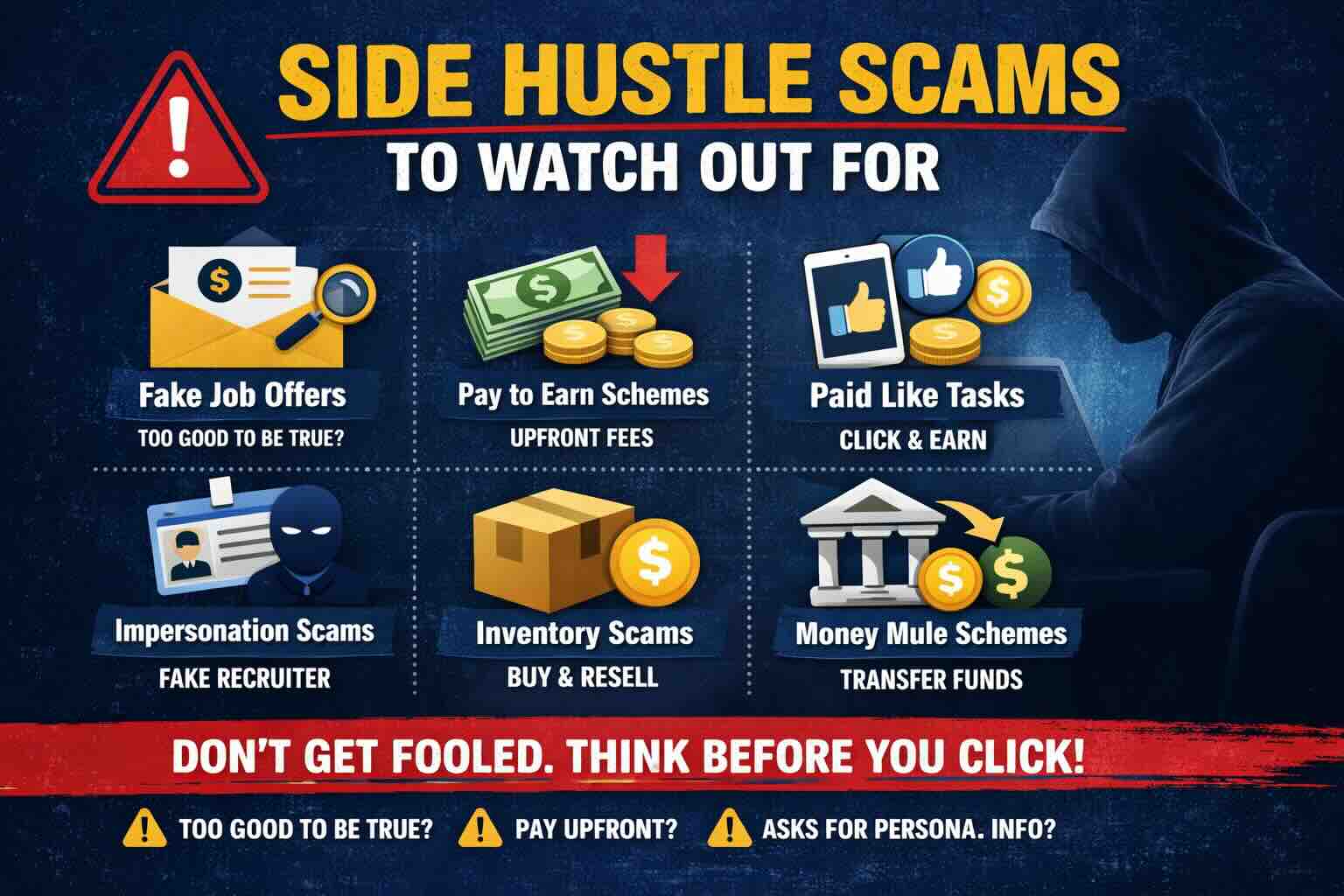
🕵️ 1. “Too Good to Be True” Job Offers
Ever seen an email or message promising big money for minimal work — like reshipping packages from home or doing “data entry”?
- Red flags include:
✅ Guaranteed high earnings with no skills needed
✅ Little or vague job description
✅ Contact via text or social media DM instead of official job listings
Scammers use these to collect your personal information — like your Bank account or Social Security number — not to actually hire you.
Tip: Real companies give you time to think, provide clear job details, and never contact you out of the blue.
💰 2. Advance-Fee Scams (Pay to Earn)
This classic scam shows up in side hustle offers where you’re told to pay for training, software, inventory, or background checks before you can start earning. This is known as an advance-fee scam — scammers take your money, then disappear.
Important: No legitimate employer or gig platform should ever ask you to pay them first.
📱 3. Paid Engagement / Like Tasks
You might see posts saying you’ll get paid for liking posts, rating apps, or completing basic “tasks.” These often sound legit at first — sometimes even paying a tiny amount — but eventually ask you to pay a fee or buy “credits” to unlock more tasks. That’s the scam part.
👉 The FTC and consumer reports have flagged these types of game-like online job scams that have stolen millions.
Tip: Legit gig platforms don’t make you pay to earn money.
📧 4. Fake Job Listings & Impersonation
Scammers will sometimes pretend to be reputable companies, government agencies, or hiring managers to gain your trust — then ask for sensitive data like your Social Security number or bank routing information.
7 signs it’s a scam:
- No verifiable company name or website
- Offers come via random email or text
- They ask for personal info up front
- You get pressured to decide immediately
Always check the company’s official career page and look up reviews before responding.
🏦 5. Resale / Inventory Scams
In some fraudulent offers, you’ll be told to buy discounted inventory — like luxury goods — to resell for a profit. Then you never receive the products, or you’re left with worthless or fake items.
This is a known job scam pattern targeting people looking for extra income.
Tip: If the “inventory” offer requires payment before you see the goods, proceed with extreme caution.
🚐 6. “Money Mule” Schemes
In more serious schemes — especially on social media — scammers will try to get you to receive and transfer money for them using your bank account (often with a small cut promised).
This might seem like a gig or side hustle at first, but it’s actually illegal money laundering — and you can face criminal charges. Law enforcement has increasingly warned about this tactic rising online.
Extreme caution advised.
🛡️ How to Stay Safe
Here are practical ways to protect yourself from side hustle scams:
✔️ Research the company: Look up the business online, check LinkedIn or Glassdoor reviews, and see if it has a track record.
✔️ Question big promises: If earning sounds too easy or too high, that’s a red flag.
✔️ Never pay up front: Legit opportunities don’t ask for fees.
✔️ Protect your info: Don’t give out SSNs, bank numbers, or sensitive data until you’ve verified the legitimacy.
✔️ Report fraud: If you spot a scam, report it to the FTC here → https://reportfraud.ftc.gov/
💡 Bottom Line
Scammers are clever and constantly changing tactics — especially when people are eager to earn extra income. The good news? Staying sharp, checking every offer, and trusting your instincts will help you avoid the traps.
If you’re building a side hustle business, treat your safety as seriously as your brand — and you’ll be better off in the long run.